
What Actually Happens When Crows Peck at Your Beaverton Roof
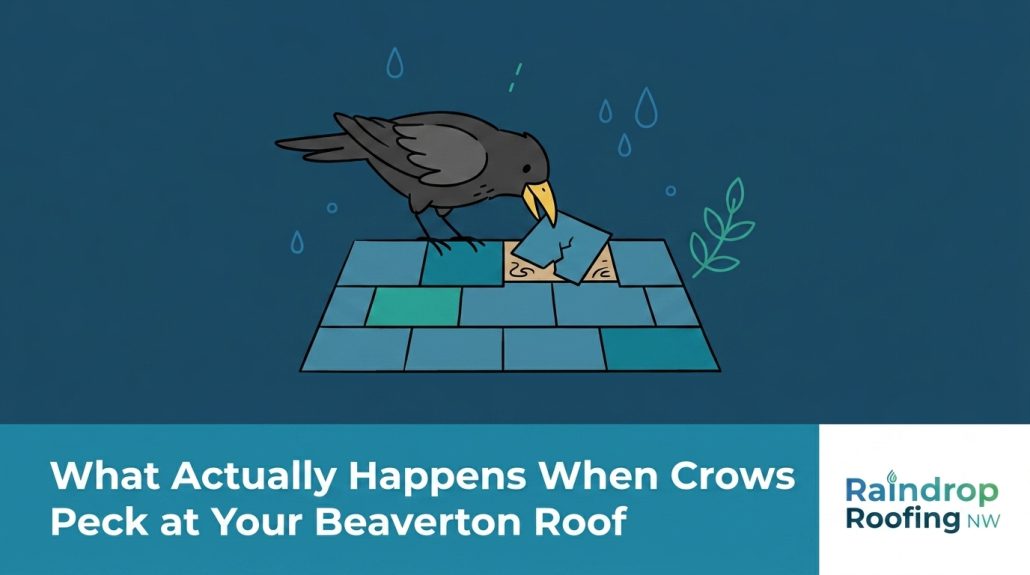
Are Crows Just a Nuisance, or Are They Damaging Your Beaverton Roof?
Is that flock of crows congregating on your house just making a racket, or are they causing actual harm? If you are wondering what actually happens when crows peck at your Beaverton roof, the short answer is that they are actively stripping away its primary defense system. At Raindrop Roofing NW, our team frequently fields calls from homeowners concerned about bird activity. While corvids are a familiar sight in our area, their foraging behavior on asphalt shingles goes far beyond a simple noise complaint. Every strike of their beak dislodges the protective, crushed-stone granules that shield your asphalt from the harsh summer elements.
The core problem most homeowners face is not just the immediate mess, but the long-term vulnerability left behind. When crows strip these granules, they expose the raw, petrochemical base of the shingle directly to the intense sun. This creates a critical decision point for you as a homeowner: you need to determine whether this localized granule loss is purely cosmetic or if it is severe enough to compromise your home’s waterproofing and energy efficiency during peak summer heat.
If you are already noticing bare, black patches on your shingles where birds frequently gather, reaching out for professional roofing services is the safest way to diagnose the severity of the wear.
Understanding the mechanical breakdown that occurs when birds interact with your shingles is the first step in protecting your home. In the following sections, we will break down exactly why these birds target your home, how the resulting damage interacts with peak summer weather, and what steps you can take to secure your property.
Why Crows Target Asphalt Shingles in the Pacific Northwest
To stop the damage, you first need to understand the behavior driving it. One common misconception is that crows are trying to eat the asphalt or the fiberglass matting itself. In reality, they have zero interest in your building materials. They are hunting for food, and your roof happens to be an excellent hunting ground.
The Micro-Ecosystem Above Your Head
The damp, temperate environment of the Pacific Northwest creates ideal conditions for organic growth on exterior surfaces. Even a thin layer of organic debris, algae, or early-stage moss provides a habitat for various insects, spiders, and larvae. These pests seek refuge in the tiny crevices between shingles, under the overlapping edges, and within the root structures of moss.
Crows are highly intelligent, observant foragers. Once they realize that a specific slope of your house harbors a steady supply of insects, they will return repeatedly. In their attempt to dig out a hidden beetle or grub, they use their strong, specialized beaks to strike the surface. This mechanical pecking action easily dislodges the ceramic-coated granules embedded in the asphalt.
A Localized Issue, Not a Material Failure
In our years of serving Beaverton at Raindrop Roofing NW, a pattern we see often is homeowners mistaking bird damage for defective roofing. It is important to recognize that this is a localized, environmental issue rather than a systemic failure of your roofing materials. The shingles are doing exactly what they were designed to do, but they are facing an unnatural, concentrated mechanical force.
- Targeted zones: Crows typically focus on specific areas, such as the ridges, the eaves, or shaded valleys where moisture and bugs accumulate.
- Repeated strikes: The damage compounds because corvids are creatures of habit. A successful hunt today means they will bring the flock back tomorrow.
- Debris accumulation: Trees overhanging the roofline drop sap, leaves, and needles, accelerating the insect population and, consequently, the bird activity.
Because the Pacific Northwest climate naturally fosters the exact type of organic growth that draws these insects, Beaverton OR homes are particularly susceptible to this specific chain of events. Removing the food source is ultimately the only way to break the cycle.
How Granule Loss Leaves Your Roof Vulnerable to Summer Heat
The most immediate threat from bird damage does not actually come from moisture—it comes from the sun. The rough, sand-like surface of your shingles is made up of specialized granules. These granules serve a vital purpose: they act as a heavy-duty sunscreen for the asphalt layer beneath.
The Physics of UV Degradation
Asphalt is a fantastic waterproofing agent, but it is highly sensitive to ultraviolet (UV) radiation and extreme temperature fluctuations. When crows peck away the granules, the bare, black asphalt is left completely exposed to the elements. During the peak heat of July and August, this exposure becomes a rapid catalyst for material breakdown.
Without its reflective, protective coating, the bare patch absorbs a massive amount of solar radiation. The localized temperature of that specific bare spot can spike significantly higher than the surrounding healthy shingles. This intense, concentrated heat causes the petrochemical oils within the asphalt to bake out and evaporate.
The Consequences of Dried-Out Asphalt
As the essential oils evaporate, the asphalt loses its flexibility. A healthy shingle needs to be pliable to expand during the heat of the day and contract as temperatures drop at night. When the material dries out due to UV exposure, it can no longer handle this thermal shock.
- Blistering: The trapped gases from the baking asphalt bubble to the surface, creating fragile blisters that pop and leave deeper craters.
- Cracking: The brittle material snaps under the stress of thermal contraction, creating micro-fissures that penetrate down toward the fiberglass mat.
- Curling edges: The localized tension causes the edges of the damaged shingle to lift, breaking the wind seal and leaving it vulnerable to being torn off in a summer storm.
Furthermore, missing granules drastically reduce your home’s energy efficiency. The bare black spots absorb thermal energy and transfer that heat directly into your attic space, forcing your cooling system to work much harder during the hottest weeks of the summer and negatively impacting your indoor air quality.
The Compounding Threat: From Summer UV to Energy Loss
The true danger of bird damage lies in how the extreme summer heat interacts with the weakened materials. What starts as a minor cosmetic issue in the spring compounds into a severe structural and energy-efficiency risk by mid-summer.
The Lifecycle of Exposed Asphalt
- Spring Foraging: Crows strip the granules while hunting for insects in the mild weather.
- Summer Baking: The exposed asphalt is subjected to extreme UV radiation and peak thermal loads, causing it to dry out, blister, and develop micro-cracks.
- Thermal Shock: As the roof bakes during the day and cools at night, the brittle material snaps under the stress, deepening the fissures.
- Cooling Performance Collapse: The heat-absorbing bare patches transfer massive amounts of solar heat into the attic, overwhelming your HVAC system and driving up energy costs.
The Moss Connection
To make matters worse, the rough, cratered surface left behind by the missing granules and blistered asphalt becomes prime real estate for future organic growth. Even during the dry heat of July, dormant moss spores anchor themselves deep into these unprotected divots. Once any moisture is introduced, the root-like structures (rhizoids) of the moss pry the remaining, heat-brittled asphalt apart, accelerating the degradation and starting the entire cycle over again for the next generation of foraging birds.
This compounding timeline highlights exactly why summer damage cannot be ignored. The window of opportunity to address the weakened shingles is right now, before peak temperatures compromise your home’s energy efficiency and bake the exposed asphalt beyond repair.

Diagnosing the Damage: Weather Wear vs. Localized Crow Pecking
Not all granule loss is created equal. As a homeowner, it can be difficult to look up at your roofline and determine what caused the bald spots. Is it just an aging roof, did a recent hailstorm roll through, or are the local birds to blame?
Based on our firsthand observations inspecting Beaverton OR roofs at Raindrop Roofing NW, our team knows exactly what specific wear patterns look like. Differentiating between generalized weather fatigue and targeted bird strikes is critical for deciding the right course of action.
Visual Markers of Shingle Damage
A professional on-the-roof assessment looks for very specific clues to diagnose the root cause of the material failure. Here is how the different types of damage typically present themselves:
| Damage Source | Distribution Pattern | Visual Characteristics |
|---|---|---|
| Crow Pecking | Highly localized; clustered near ridges, eaves, or mossy patches. | Small, distinct pockmarks. Divots often have a slightly irregular, scratched appearance where the beak struck. |
| Hail Impact | Randomly scattered across the entire upward-facing slope. | Round, bruised indentations. The fiberglass mat beneath may feel soft or fractured to the touch. |
| Normal Aging | Widespread, uniform loss across the entire roof surface. | Smooth, generalized thinning. Granules wash out evenly into the gutter system over a period of decades. |
The diagnostic takeaway: If you see clustered, irregular bare spots specifically in areas where debris or moss has gathered, bird foraging is the highly likely culprit. However, because the damage looks similar to hail from the ground, an up-close physical inspection is required to confirm the diagnosis and assess how deeply the asphalt has been compromised.
Comprehensive FAQ: Bird Damage and Roof Maintenance
Homeowners dealing with localized wildlife activity often have the same pressing questions. Here are the clear, expert answers to the most common concerns we hear regarding corvid behavior and material wear.
Why are crows pecking at my roof?
Crows peck at roofs to uncover insects hiding beneath shingles or within organic growth like moss and algae. They are incredibly smart foragers who remember where food sources are located. This foraging behavior inadvertently removes the protective granules from the asphalt as their strong beaks strike the surface.
Can bird damage cause roof leaks?
Yes, while the pecking itself rarely punctures the roof entirely, the resulting granule loss exposes the underlying asphalt to severe UV rays. The degraded asphalt eventually dries out, blisters, and cracks under thermal stress. Once those cracks form, unseasonal moisture or summer storms can penetrate the barrier and cause active leaks inside your home.
How do you fix granule loss on shingles?
Granules cannot be re-adhered to a shingle once they are lost. Sprays or paints will not restore the structural integrity or the thermal protection of the material. The standard, effective repair involves a professional replacing the specific damaged shingles entirely to restore the roof’s continuous protective barrier.
How do I stop birds from pecking my roof?
Removing their food source by keeping the surface clear of moss, algae, and organic debris is the most effective method. Professional cleaning and ongoing maintenance deter the insects from nesting in the first place. Without a reliable food source, foraging birds will naturally move on to better hunting grounds.
Will homeowners insurance cover damage from crows?
Insurance coverage for wildlife damage varies heavily by policy, but many standard policies consider this type of wear to be a preventable maintenance issue rather than a sudden, accidental event (like a fallen tree or hail). Because the damage occurs slowly over time due to foraging, it is often excluded, making proactive maintenance critical.
How quickly does exposed asphalt degrade in the summer sun?
Without its protective granules, asphalt can begin to blister and dry out within a single season of peak summer heat. The concentrated UV radiation bakes the essential oils out of the material very rapidly. Prompt inspection and targeted replacement are necessary to prevent this rapid degradation from compromising your home.
Get a Professional Assessment During Peak Summer Heat
Dealing with nature’s impact on your home can be frustrating, but taking action early prevents minor headaches from turning into major structural repairs. Now that you know what actually happens when crows peck at your Beaverton roof, you understand that the clock is ticking. The granules are gone, the asphalt is exposed, and the intense summer sun is actively breaking down your waterproofing barrier and driving up your cooling costs.
Only a trained professional can get up on the surface, accurately diagnose the specific cause of the wear, and determine if the granule loss requires targeted, localized shingle replacement. Do not wait for the extreme heat to completely destroy the integrity of your shingles. Reach out to the team at Raindrop Roofing NW for an expert assessment today to secure your home, restore your energy efficiency, and ensure your system is fully prepared to handle the peak of the Pacific Northwest summer.




Trackbacks & Pingbacks
[…] off the asphalt shingles. If you want to understand the full scope of this behavior, learning what happens when crows peck your roof reveals how quickly this damage accelerates […]
Leave a Reply
Want to join the discussion?Feel free to contribute!